
Back to Newsroom
What It Means When EPA "Adds" Microplastics to a List (and Leaves It Off Another)
July 9, 2026

Eric Roy, Ph.D.
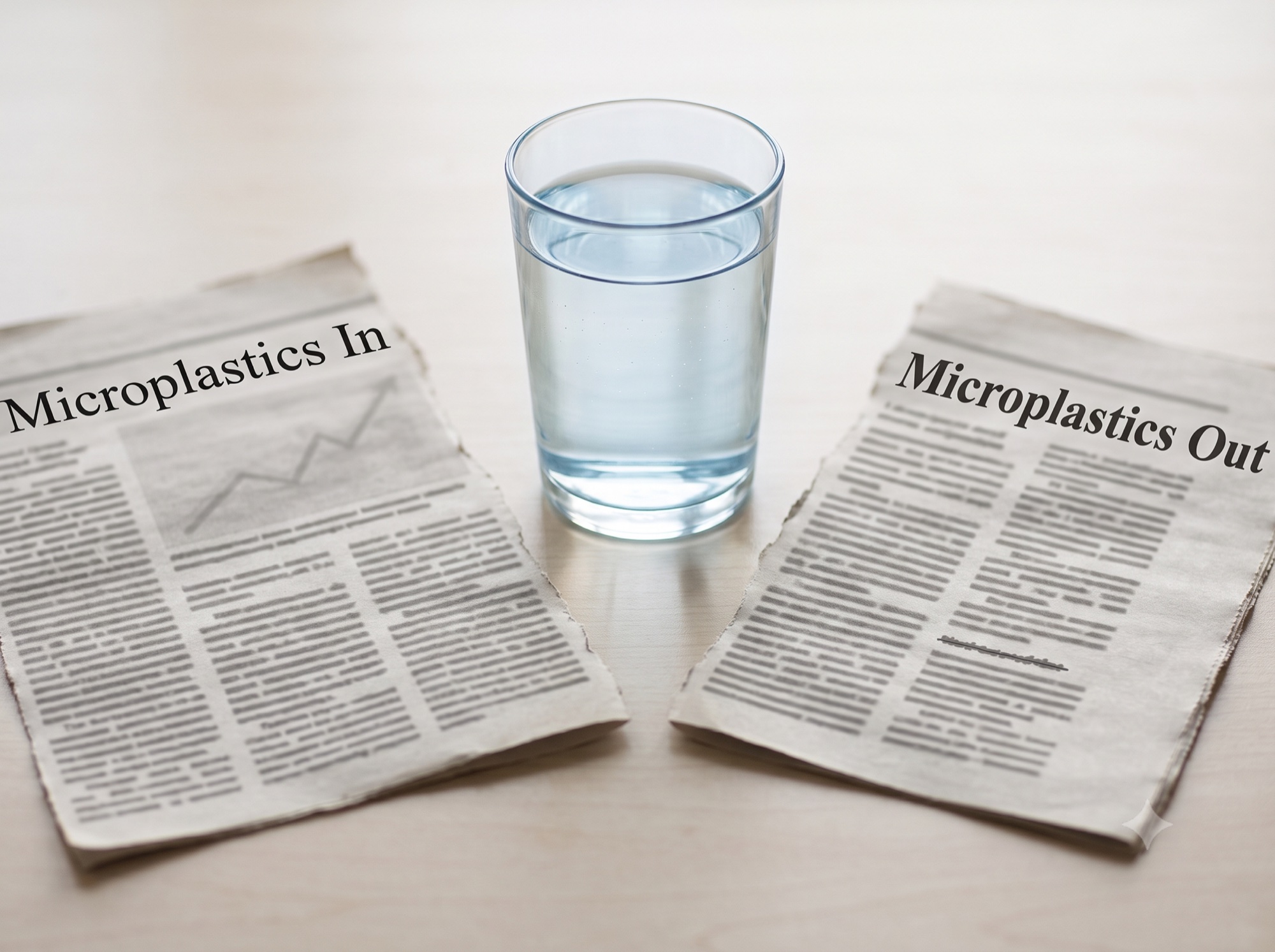
In April, EPA made headlines when it added microplastics to its draft of the newest Contaminant Candidate List (CCL). In July the news seemed to flip, when the agency's new national testing proposal left microplastics out. I've spent about 25 years working in water quality science and regulation, and I want to walk through what happened between those two announcements.
The two headlines feel contradictory because both come from EPA and both concern drinking water. But the candidate list and the testing program are separate processes under the Safe Drinking Water Act (SDWA), each on its own five-year cycle, staggered by design.
The CCL is a list that EPA is required to assemble every five years, made up of unregulated drinking water contaminants, and it's the entry point of the process to determine whether or not new contaminants will become regulated. A new contaminant gets placed on the CCL after EPA reviews existing peer reviewed studies, and concludes that it likely has negative health effects in humans, that it occurs in public water systems, and that exposure through drinking water is likely. Placement on the list puts a contaminant in line for the research that a future regulatory decision would need.
CCLs are numbered in sequence, CCL 1 through the current draft CCL 6, and EPA has published one roughly every five years since 1998. CCL 5, which was released in 2022, carried 66 individual chemicals, 3 chemical groups, and 12 microbes; the draft CCL 6 carries 75 chemicals, 4 chemical groups, and 9 microbes. SDWA regulates just over 90 contaminants, so each CCL is comparatively long. The headlines from April 2026 were about microplastics being part of the draft CCL 6, which has since gone through public comment (the comment period closed in June 2026) and now awaits finalization.
Occurrence testing is a separate process called the Unregulated Contaminant Monitoring Rule (UCMR). The purpose of UCMR is to determine how prevalent a contaminant is and what concentrations it's found at in thousands of public water systems. EPA builds each UCMR cycle by drawing from CCLs and a few other priority sources, then downselecting to a list of up to 30 contaminants (the maximum number per UCMR cycle). From a regulatory process standpoint, UCMR takes place downstream of CCL, and upstream of the Regulatory Determination, the step that can end in an enforceable limit.
The July 2026 headlines were about microplastics not being included as part of the 30 contaminants on UCMR 6, which include ultrashort organofluorines, pesticide metabolites, semivolatile organic compounds, and purgeable organic compounds. EPA did not remove microplastics from the CCL; it left them off UCMR 6. The public comment period for UCMR 6 runs through August 31, 2026.
The reason EPA gave is straightforward. In the proposed rule, the agency wrote "there is no validated EPA or consensus drinking water analytical method with the proper quality control data, accuracy, and precision that could be used for UCMR 6, and it is not feasible to develop a drinking water analytical method within the statutory timeframe."
When you look at the contaminants that made the UCMR list, they all have a published EPA method, which means that any certified laboratory is able to measure the same result for the same sample, which is critical for issuing fines. The idea that different labs should get the same measurement sounds straightforward to the layperson, but achieving this level of standardization in laboratories is a major accomplishment, especially for emerging contaminants (I've been part of this process in my first company). EPA Method 563 is what any certified laboratory in the country can use to quantify ultrashort organofluorine compounds, including certain PFAS; 540 for the pesticide metabolites; 525.3 for the semivolatile organics; 524.3 for the purgeables.
Microplastics do not yet have an EPA standard method. What they do have is a pair of ASTM consensus methods, D8332 and D8333, for sampling and preparing water for microplastics analysis. Methods like these can be a pathway to a federal standard, but until one is validated as an EPA method, it can't be used for regulatory purposes.
It isn't unusual for a contaminant to be placed on the candidate list and be left off the UCMR that is issued shortly after. In the case of microplastics, this is doubly true because the analytical methods that are part of UCMR must become standardized enough to be performed at scale by contract laboratories.
Microplastics are still listed as a federal priority. They stayed on CCL 6, EPA says it is working toward a validated method that could be used for regulatory purposes, and a separate $144 million federal research program run through HHS is funding work on measuring microplastics in the human body. Whether this process moves fast enough to keep up with the discoveries made by universities is a different conversation, one I'll take up on its own in a later piece.
Draft CCL 6, Federal Register (April 6, 2026) · Draft CCL 6 overview, EPA and epa.gov/ccl · Proposed UCMR 6, Federal Register (July 1, 2026) · UCMR 6 public comment docket (through August 31, 2026) · ASTM D8332-20 / D8333-20 · EPA Methods 563, 540, 525.3, 524.3 · HHS/ARPA-H STOMP program, $144M · Crowell & Moring, draft CCL 6 client alert · Holland & Knight, UCMR 6 analysis